June 25th, 2024
From the plain near McCall, I began the decent down Highway 95 along the Little Salmon River. This drive was different than most I had done. The highway was nothing like those you typically find in Michigan. It was smooth asphalt with absolutely no pot holes. It curved back and forth along the banks of the river in sweeping bends. Being all down hill, the weight of the trailer pushed me ahead using very little fuel. I coasted for miles.
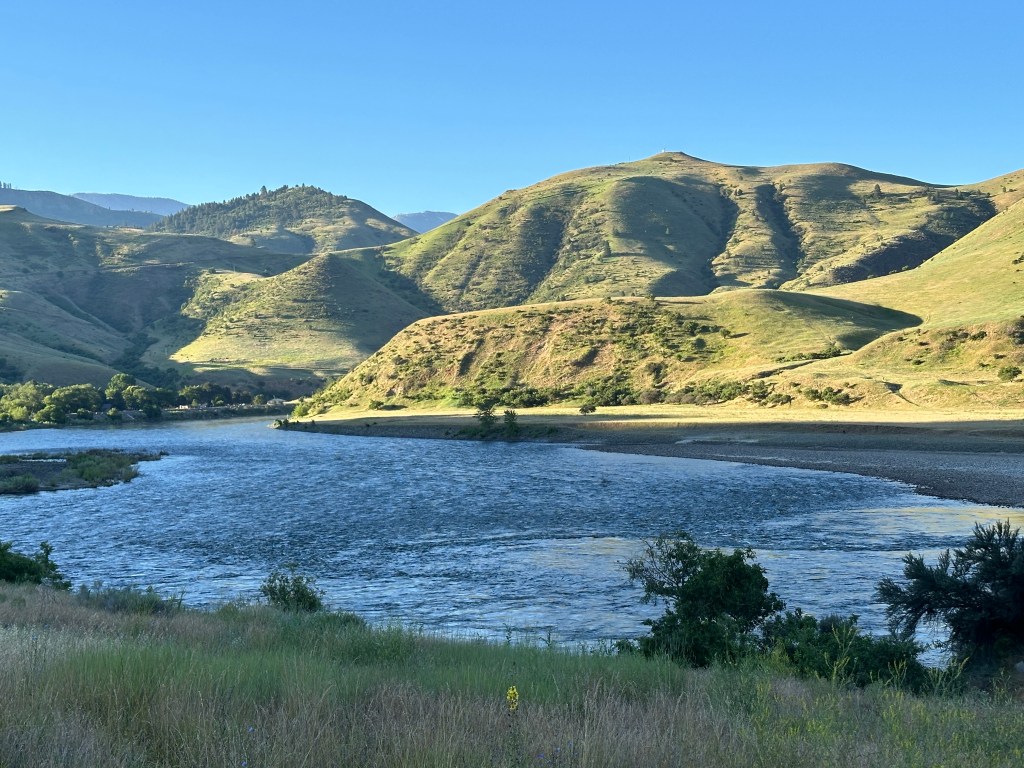
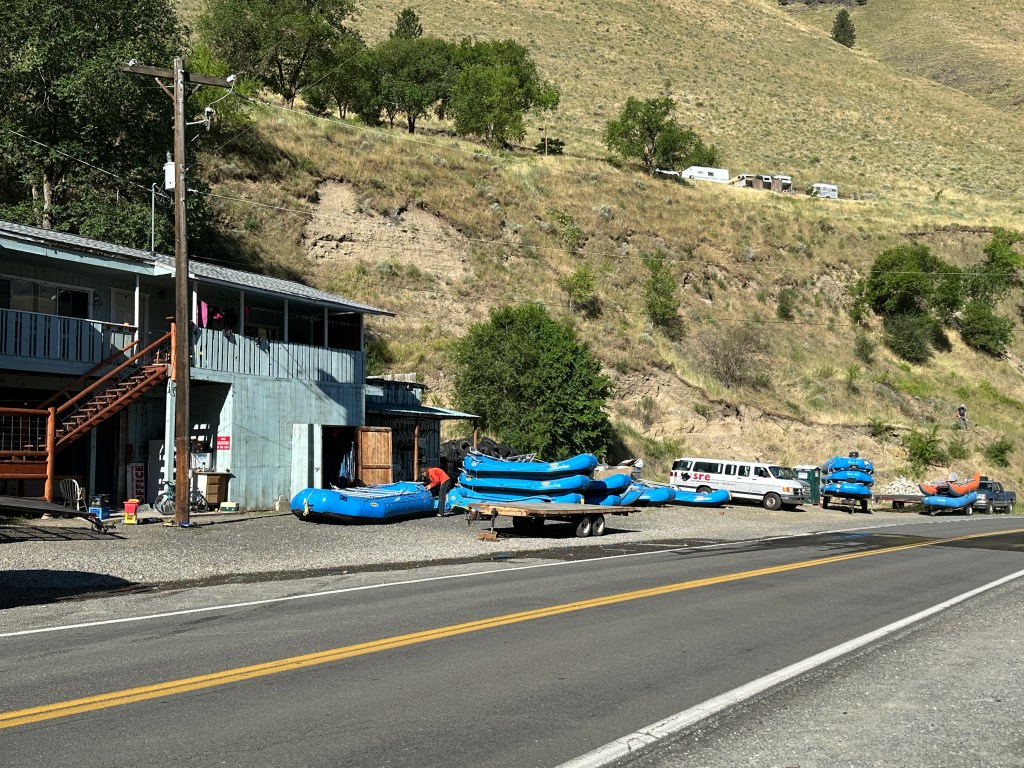
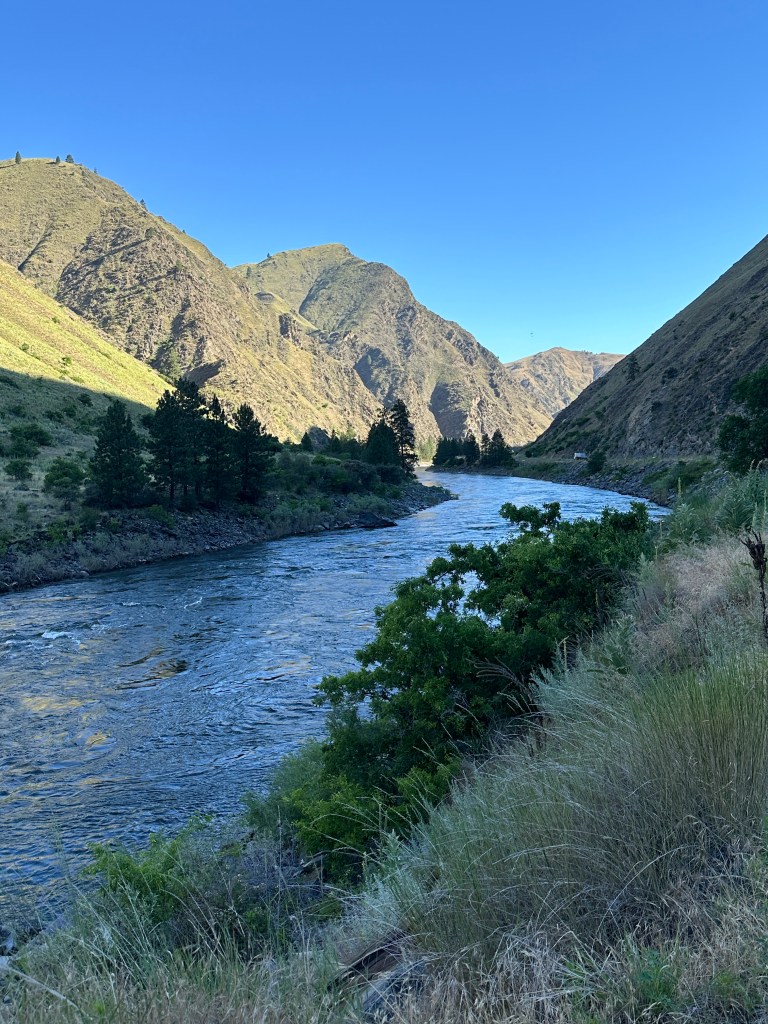

At the confluence of the main Salmon and Little Salmon Rivers, I rolled through the town of Riggins. It was a single street squeezed between the now much larger river and the canyon walls. The walls were covered with green grass with an occasional outcrop of rock that sliced the hill down to the water like a knife. There were usually ledges there that resulted in whitewater rapids where rafts splashed and kayaks maneuvered. The main Salmon had just emerged from the Frank Church River on No Return Wilderness, a vast roadless area of north central Idaho. On the other side of the westward wall of the canyon, was famous Hells Canyon of the Snake River, the deepest canyon in North America.
I followed the river down to the small town of Whitebird, where the highway turns up a steep valley away from the water. Here I veered onto Old Highway 95, crossed the river on a one lane bridge and worked my way down to Hammer Creek Campground. This was a very nicely maintained campground in the Lower Salmon River Recreation Area. I picked a site from which I could see the river and a couple of times a day would see the large Jet Boats that ran the rapids. Most of the sites in the campground were empty. It was very peaceful, open, with plenty of sunlight for the solar panels and there were even flush toilets. All this for a minimal $5 per night with my federal old timers pass. I decided to stay for 6 nights.
I have known of this tiny town of Whitebird, population 97, since the late 1970s. I read about it at the time because we owned Appaloosa horses. These horses were bred and raised by the Nez Perce Indians who lived in the vast hilly grasslands of northeast Oregon, southeast Washington and Idaho.
Whitebird was an encampment of a small band of these Indians. My father loaned me a book back in the 1970s called “From Where the Sun Now Stands” about the Nez Perce Indian war. I starting the story one evening, and could not put it down. I literally read the book in a single setting, finishing it before noon the next day. The story was interesting in a very sad way. The first battle of the war took place on the ridge above Whitebird in 1877. It did not end until the Indians, men, women, children, and livestock, had fought numerous battles while trying to escape for over 1,170 miles.
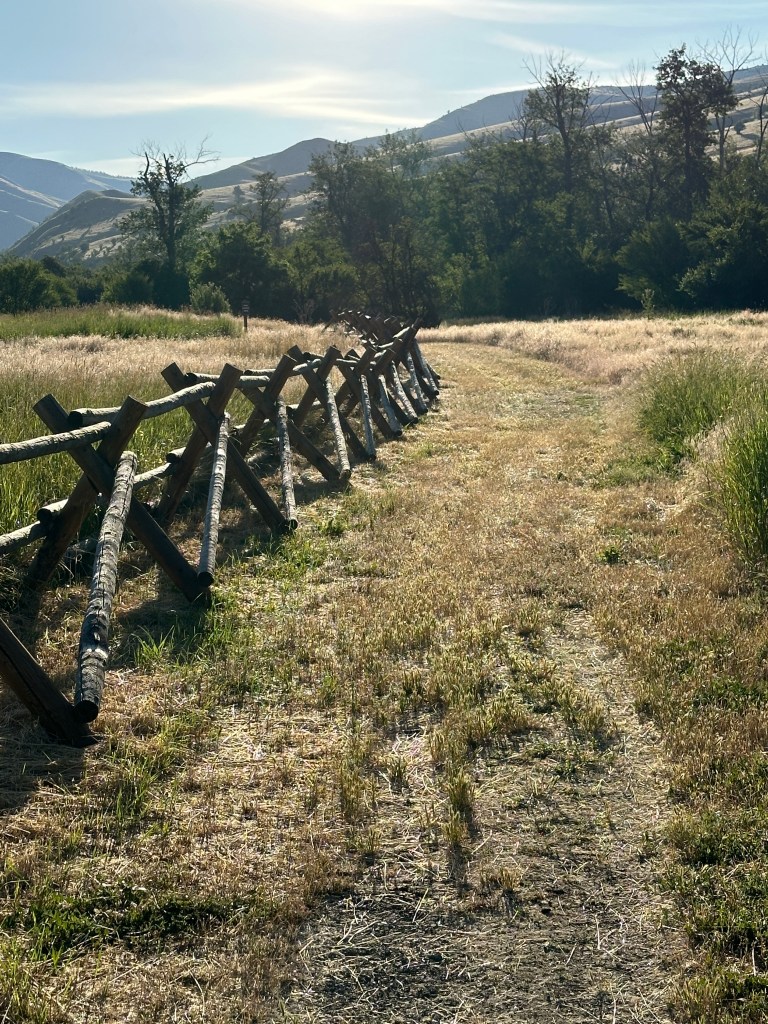
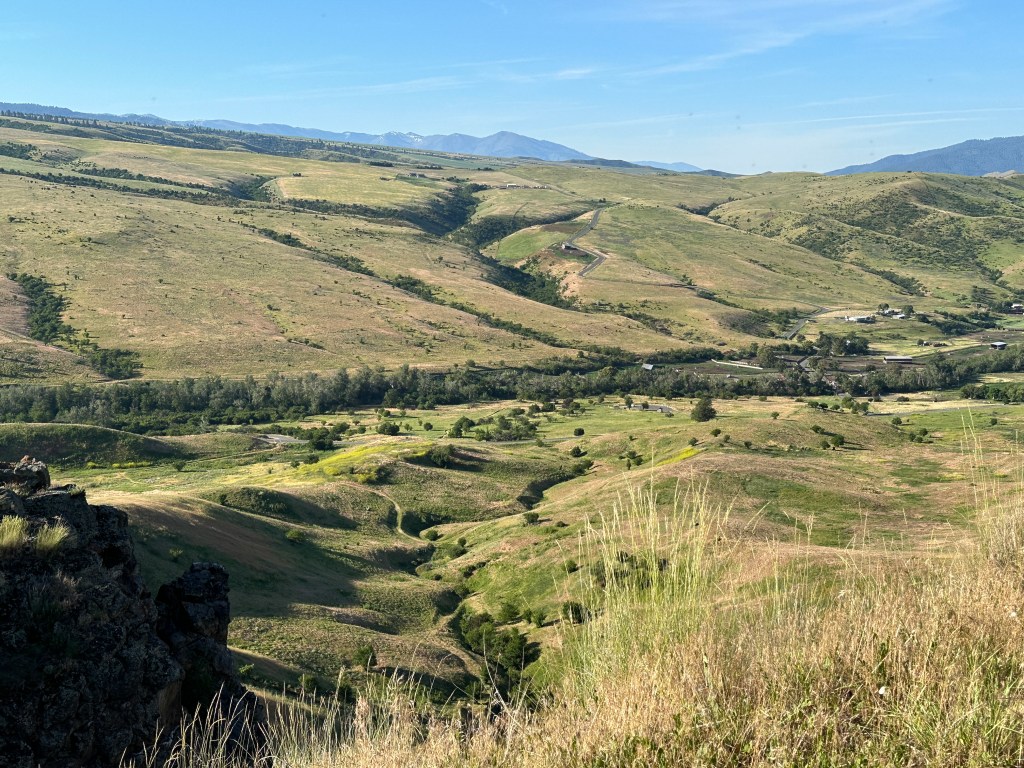
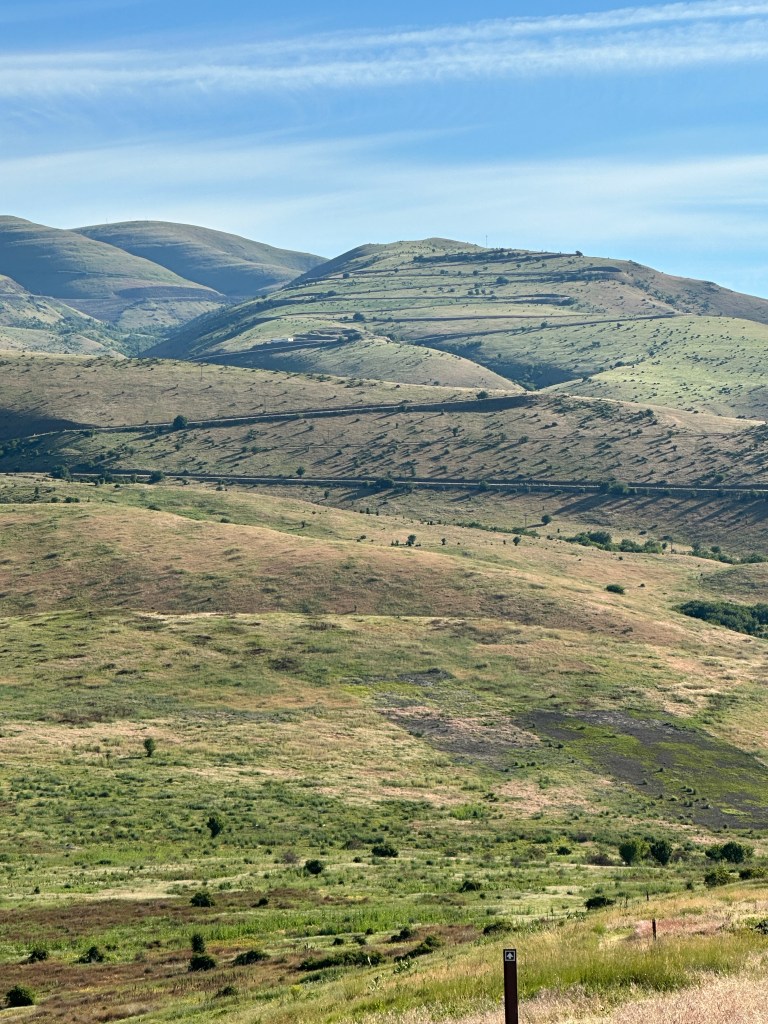
On my first morning, I drove to the Memorial site for the battle. There is a trail from the valley bottom up onto the ridge line where the fighting took place, with placards along the way, explaining the stages of the battle.
The next few weeks of my wandering, will bring me to a number of the historically significant locations related to the flight of the Nez Perce as they sought safety.



 Starting All Over