June 1st, 2024
The last place I planned to stay before heading north into the mountains of Idaho, was Craters of the Moon National Monument. The landscape into which I was heading, is not one that would normally catch my attention. I preferred forest and streams. I knew the Craters would be dry and rocky. But, a few people I met had recommended it, so I headed up Highway 93 towards the campground. I caught my first glimpse of the monument when I was about 5 miles from the park entrance. No photographs I had seen prepared me for that first view.
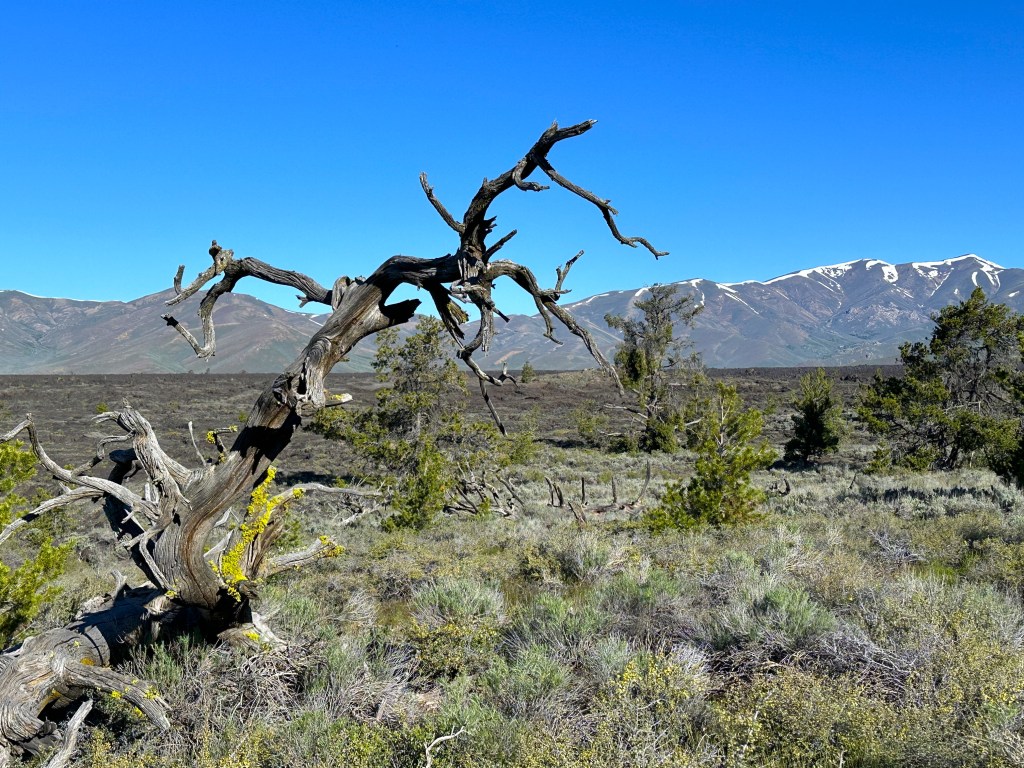
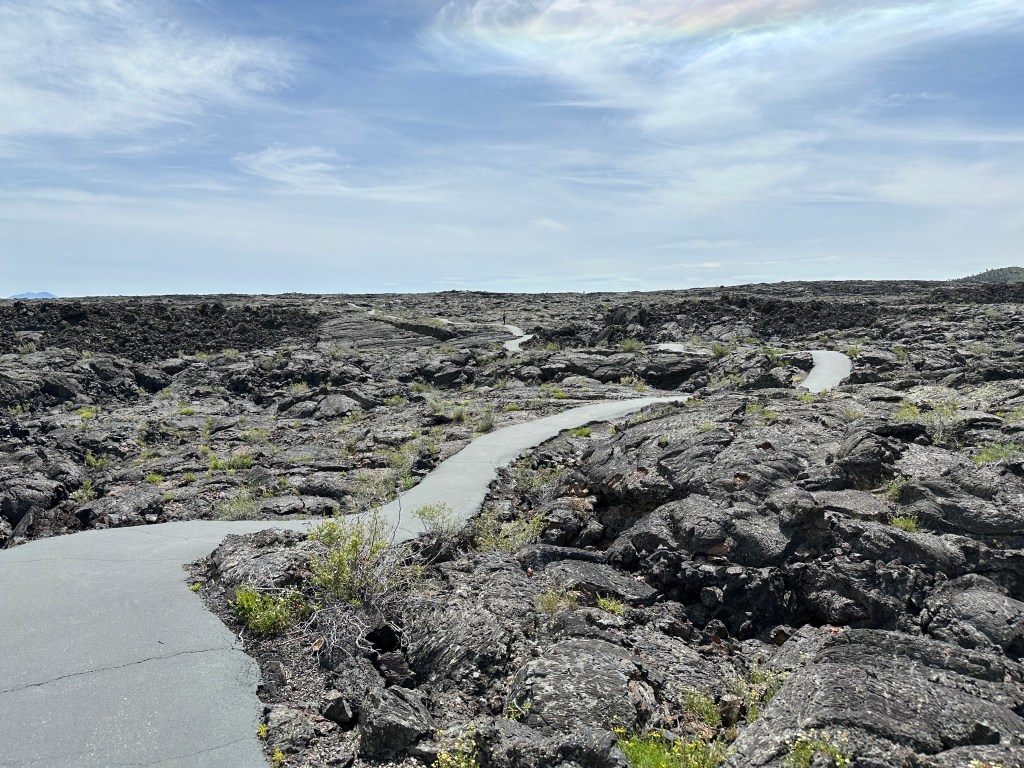
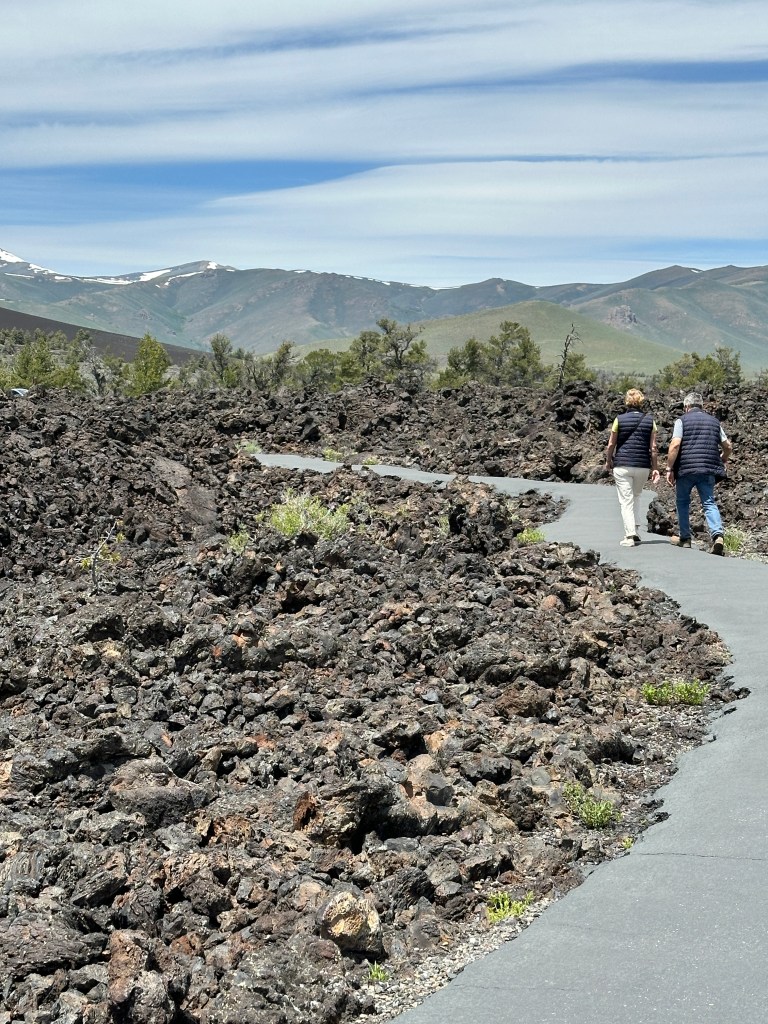
Across the highway to the left were the southern most peaks of the Salmon River Mountains. They were not forest covered, but rather covered by grass and sage. There was still snow on the very tops of the peaks. From a distance the slopes appeared smooth and green, almost like velvet. Then you looked to your right, and the difference was shocking. As far as you could see, was a broken, shattered plain of cracked black rock. This was not typical rock. It was not brown, tan, or gray like most of the stone you see in the mountains. It was a dull black. It was pointed, sharp and rough.
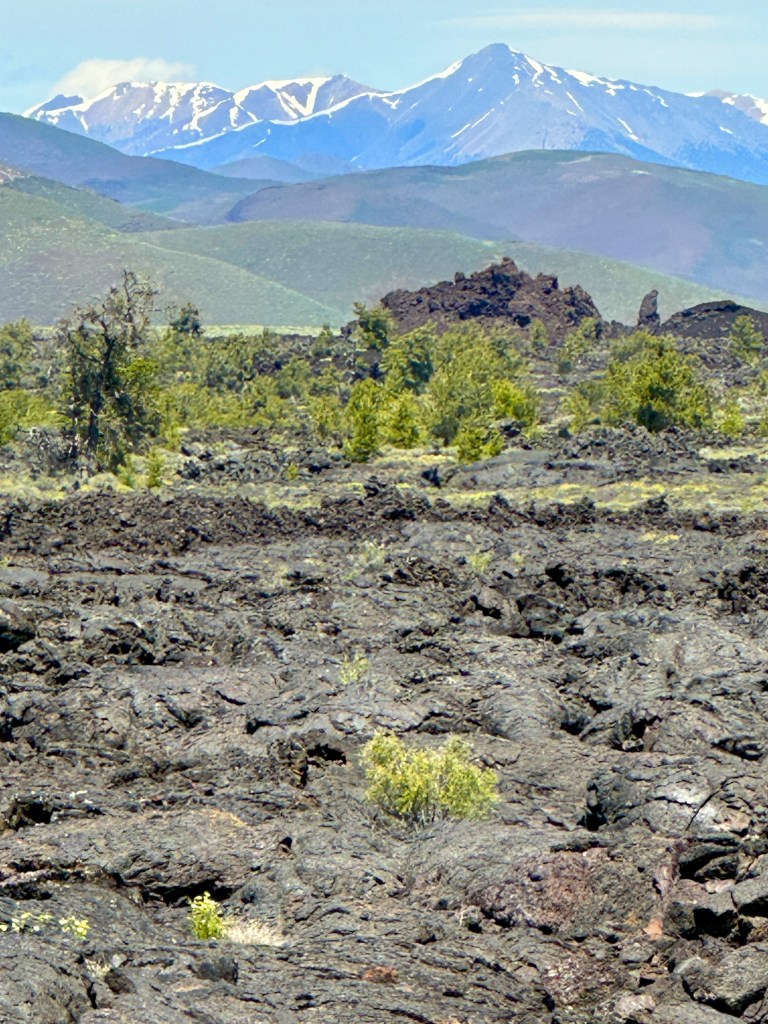
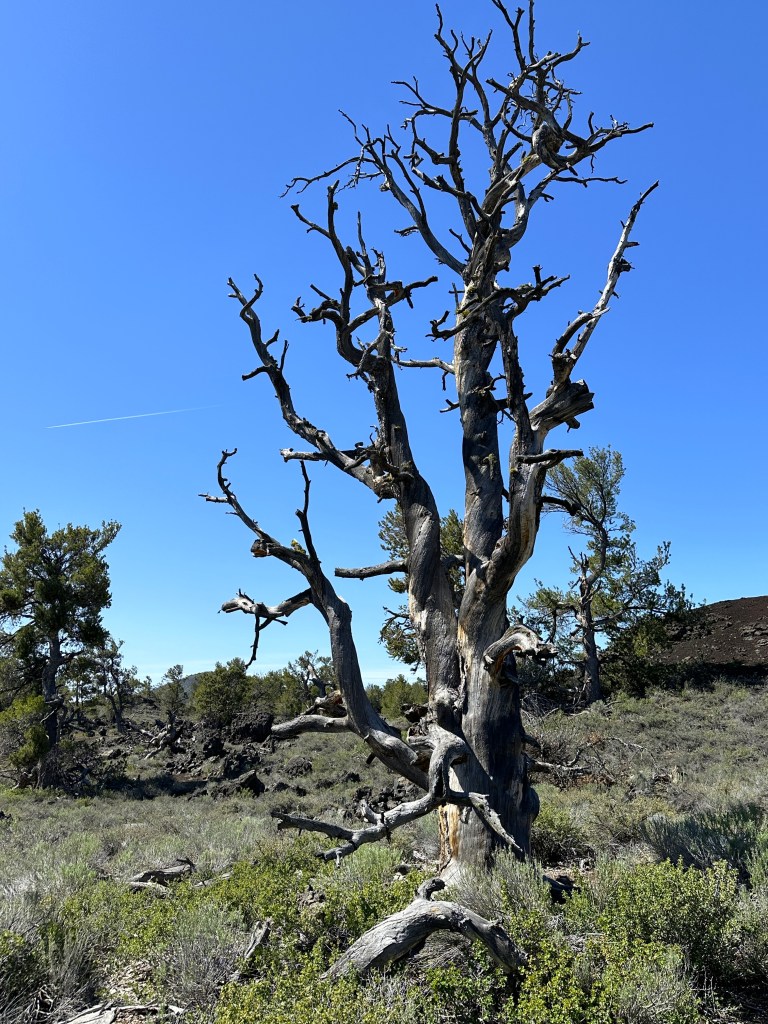
The campground was a paved loop of asphalt winding its way through this rubble. Each site was separated by shoulder high piles of volcanic chunks. It looked like a million dump trucks had unloaded coal here. A few scraggly Juniper trees gave a tiny amount of shade. Many were dead and twisted, giving you the feeling of ogres watching from every direction.
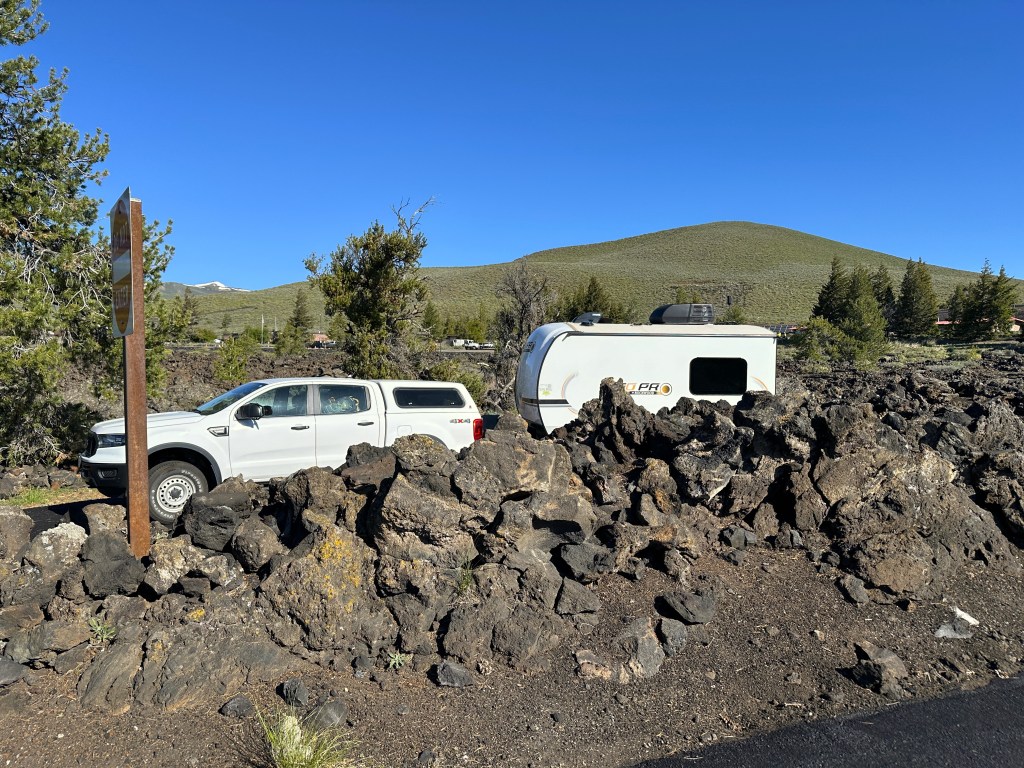
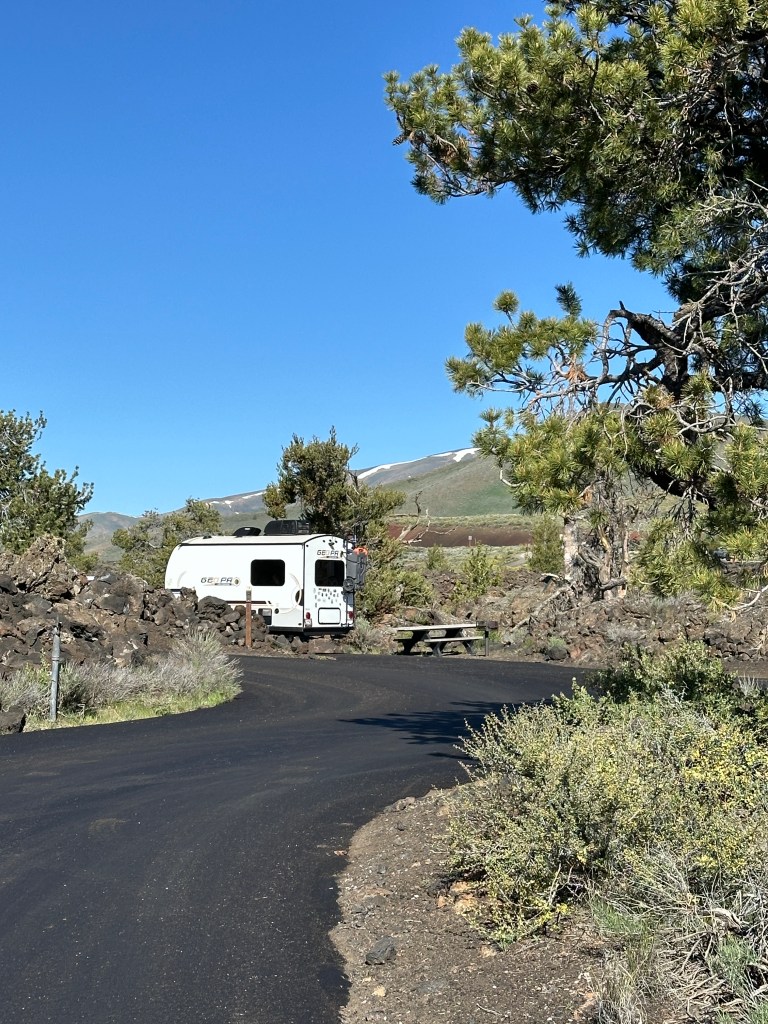

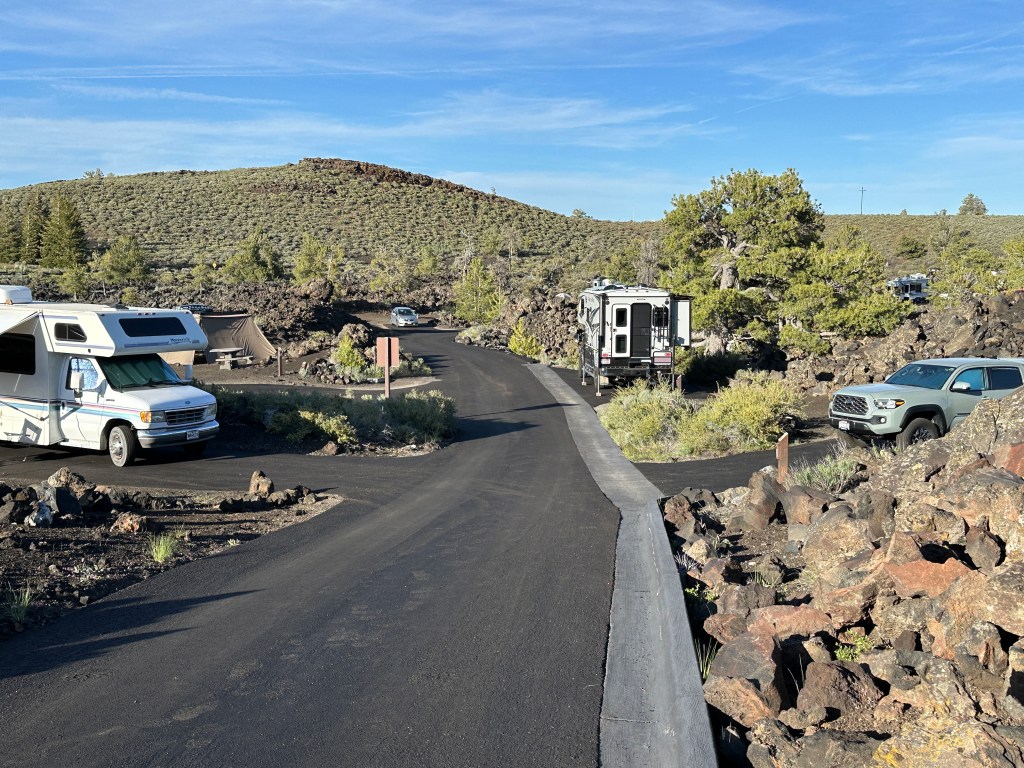
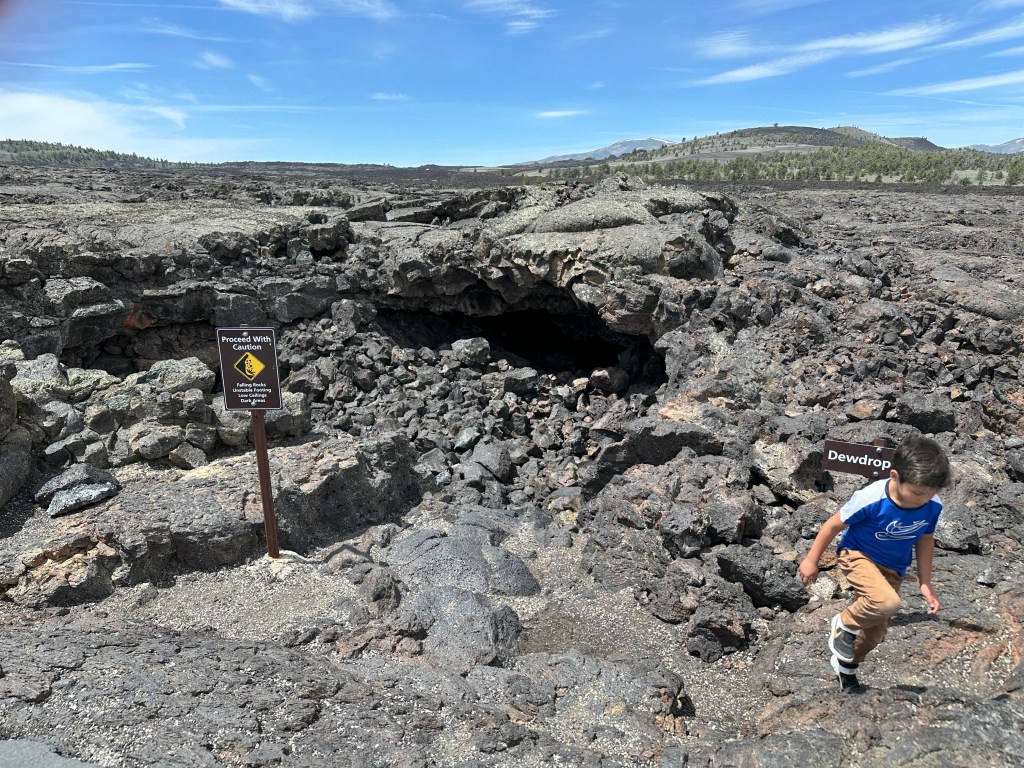
The destructive power that could have created such a landscape is a constant in your mind, yet in many ways there was an austere beauty present. The porous shattered rock contrasted with the smooth shapes of tree trunk. Here and there the green of sage, shrubs and grass offset the black of broken lava. Orange, red and yellow lichens grew on the hard surfaces and almost glowed in the sunlight. Where it looked like you could not possibly walk, there were randomly connected pathways of cinders.
From 6,100 to as recent at 2,000 years ago, this plain was an active volcanic area. Most of the activity was not due to your typical strato volcano we see in pictures. Huge pressures under the crust here uplifted the surface until fissures broke open and spewed lava that flowed down the gradual slopes of the plain. Small cones blew cinders high into the air, creating what looked like giant ant hills. The flows of lava moved slowly to the south as it cooled, leaving what looks like long rivers of warm black molasses, now hardened in the shape of cascades. It is a very inhospitable environment. Miles of it are now contained in a large wilderness preserve.
I hiked several of the few trails through the area. One climbs up onto a series of cinder cones. Another makes a loop through what is aptly called The Devil’s Orchard. All the trails are made through cinders. Walking on them instantly brought back memories of spring school days back in the 1970s. Those were the days before the extruded rubber like asphalt used for running tracks in school stadiums appeared. Running tracks were made of cinders back then. They were great for traction, but you definitely did not want to fall down as they scraped off your skin like sandpaper.
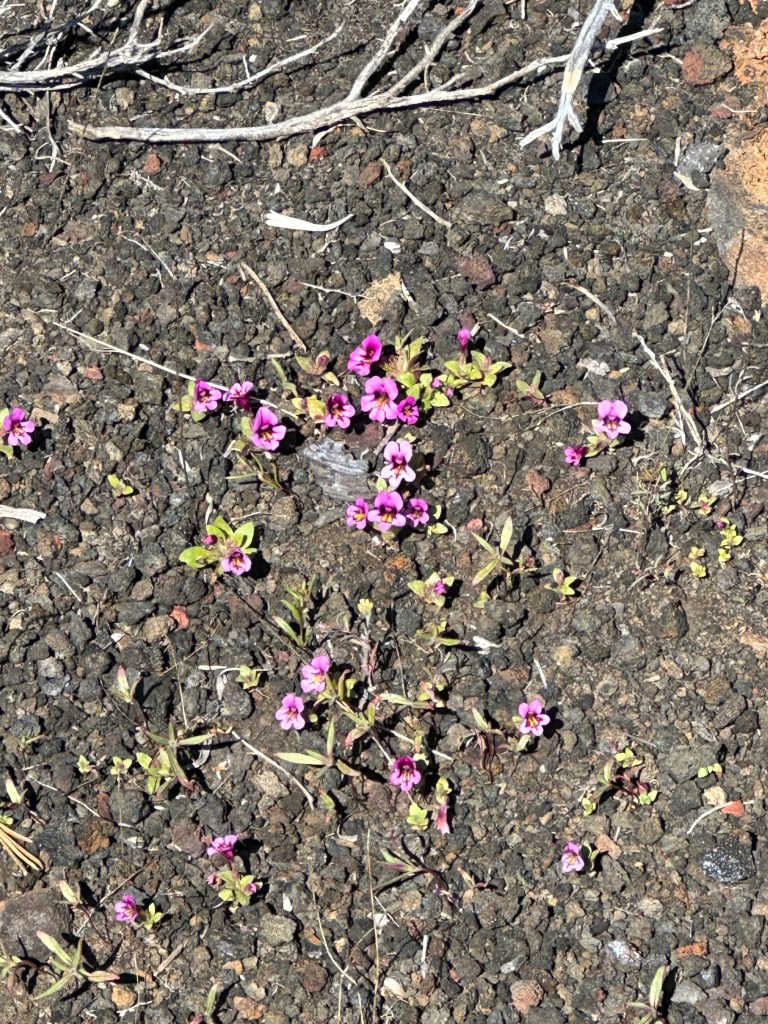

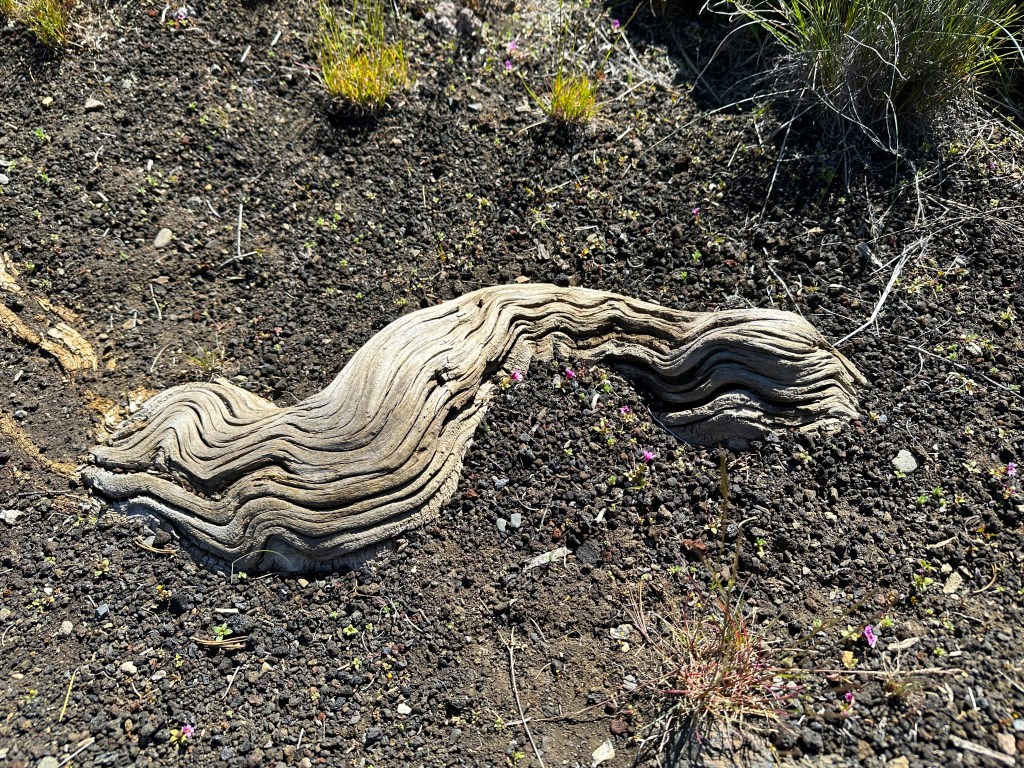
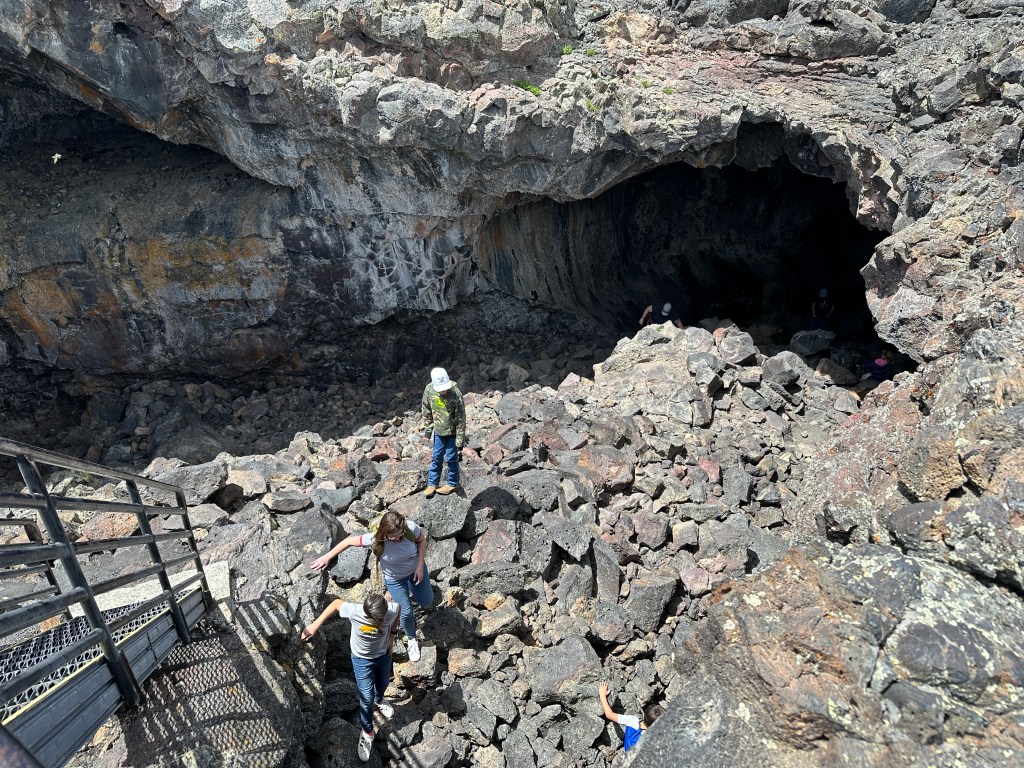
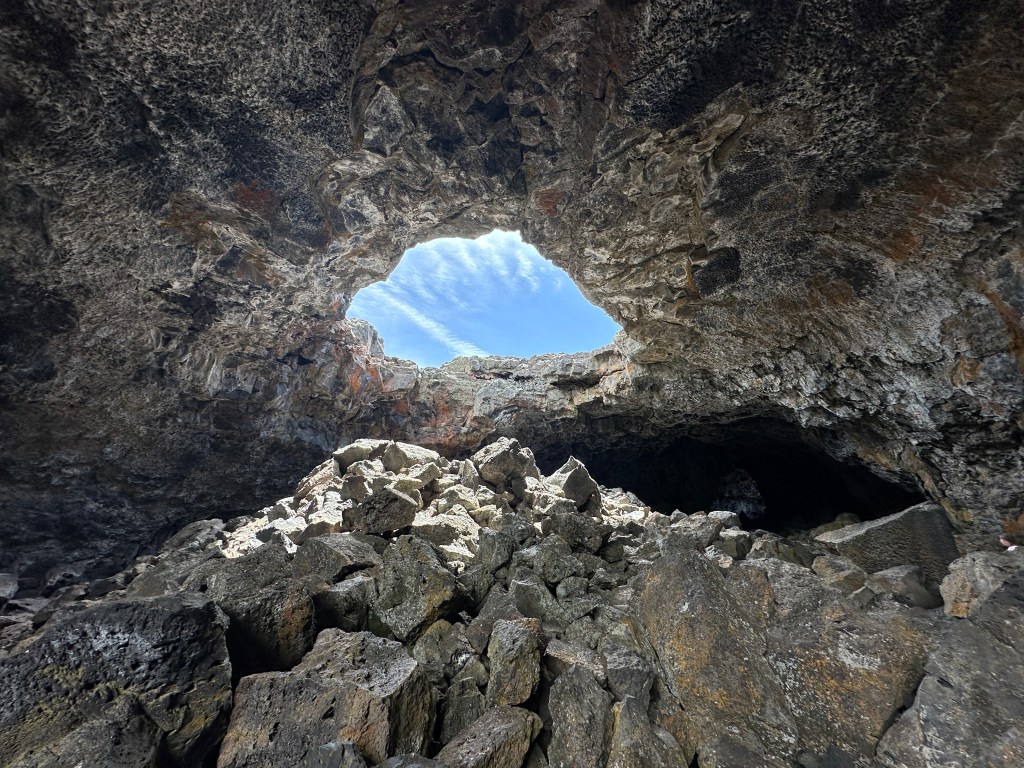
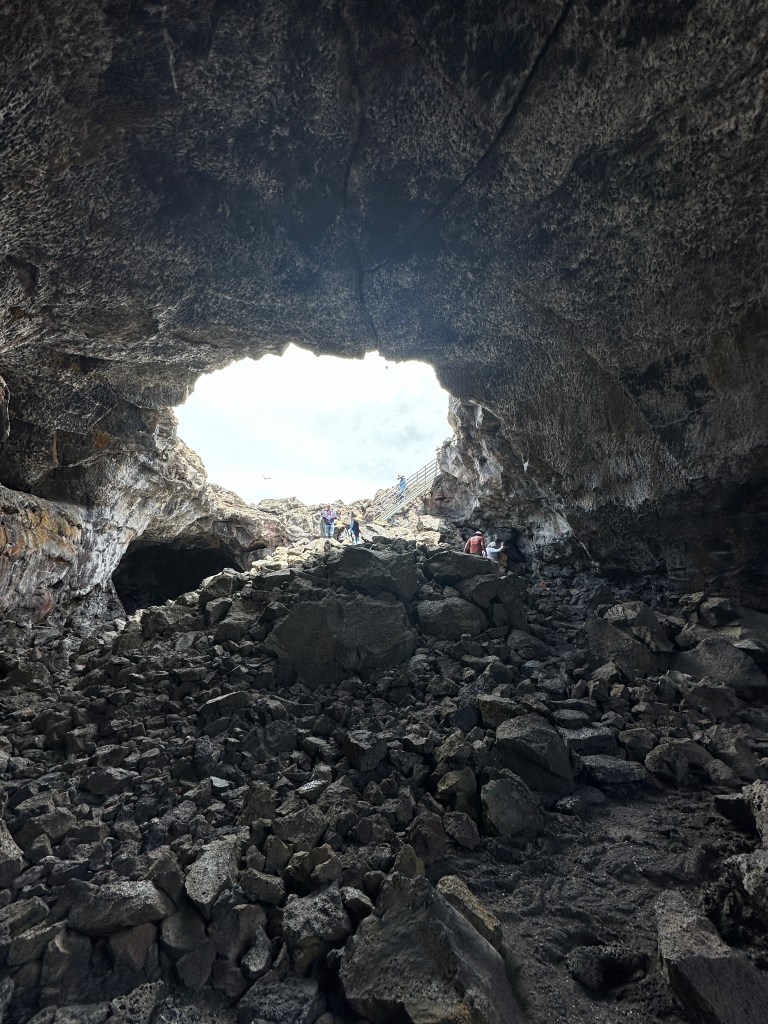
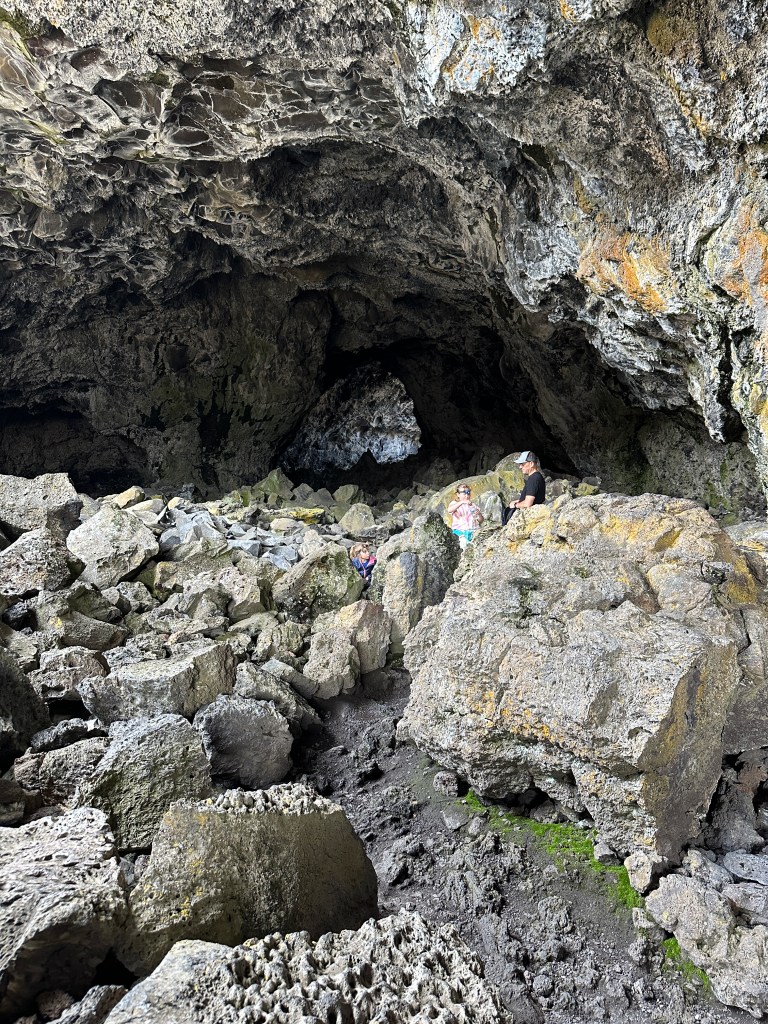
On my walks, I did not see much wildlife. There were a few ground squirrels in the campground and small warblers in the sage and sparse junipers. The lava flows that cover much of the park do not seem to be a good habitat for larger mammals. This impression is belied by the cinder trails. They are covered in as many deer tracks as those of humans. There is also a good population of bats. Flowing lava left many tubes underground that now form caves hosting them.
Craters is an interesting place to visit, but I wouldn’t want to live there.
 Starting All Over