Colorado National Monument and Grand Mesa
September 17-19th, 2021
I grew up in northern Illinois, where it is moderately flat to very flat. The scenery is cornfields and slow muddy rivers and streams. In 1975, I made my first trip to the mountains of Colorado. I fell in love with the pine forests and rocky landscape. Mostly, I was impressed by the clear, cold, cascading mountain streams. I kept going back, visiting Colorado, Wyoming, and Montana for the next 3 decades. During all those years, I never had a desire to visit the desert southwest. I did not really have a desire to see the southern or southwest part of Colorado. Dry rock and sand with sparse forest or no forest at all, just did not compare to trout filled streams of the high mountains.
This past winter, I watched a documentary entitled “Heart of the World: Colorado’s National Parks”. It covered Rocky Mountain (RMNP), Great Sand Dunes, Black Canyon of the Gunnison, and Mesa Verde National Parks, as well as Colorado National Monument. I had made the trip to Estes Park and RMNP many times. About 4 years ago, I visited Black Canyon of the Gunnison. But the documentary made me think I might have been cheating myself. I should check out the Sand Dunes and perhaps Colorado National Monument.
On the trip 4 years ago, I drove over Independence Pass to Aspen, and then down to Crested Butte and Telluride, stopping to visit Black Canyon of the Gunnison. I had always wanted to visit the ski areas about which I had read. When I left Telluride, I drove north through Montrose, heading to Grant Junction. I was looking to get back up to Interstate 70 and travel east before going up to Steamboat Springs to meet my son for some trout fishing. I never made it to Grand Junction. I noticed on my maps, a plateau called Grand Mesa, that appeared to be covered with lakes. So, I veered over the mesa, bypassing Grand Junction as well as Colorado National Monument, just to its west.
On this trip, after adding a visit at Great Sand Dunes, I decided to see the National Monument I had missed. It looked interesting in the documentary, but I wasn’t all that excited about it. I stayed overnight in Grand Junction. If I was going to look at a dry pile of rocks, I should at least see it in the best light, sunrise.
So, I rose before dawn, stopped at Denny’s for a breakfast omelete, and headed west on I-70 to the western entrance to the monument near the town of Fruita. Just a few short miles from the interstate, I passed through the unmanned entry station and started climbing up amazing orange, yellow, and red canyon walls. All colors of the smooth sandstone walls around me were enhanced by the rising sun and painted in contrasting dark shadows by points of rock and pillars of eroded stone.
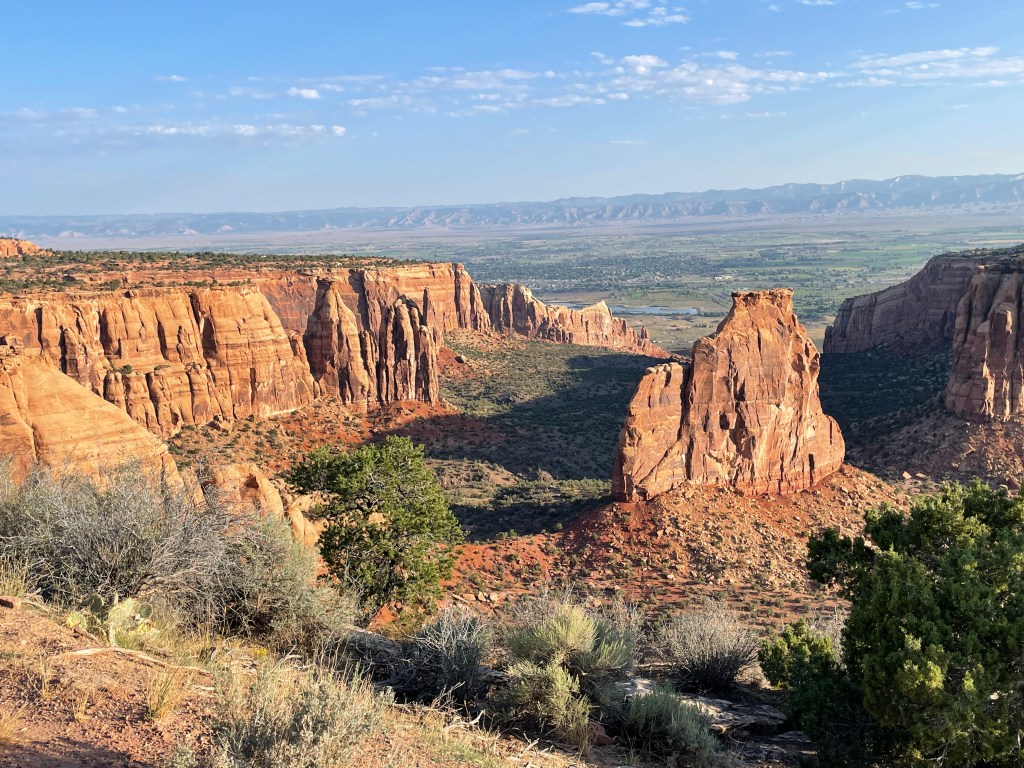
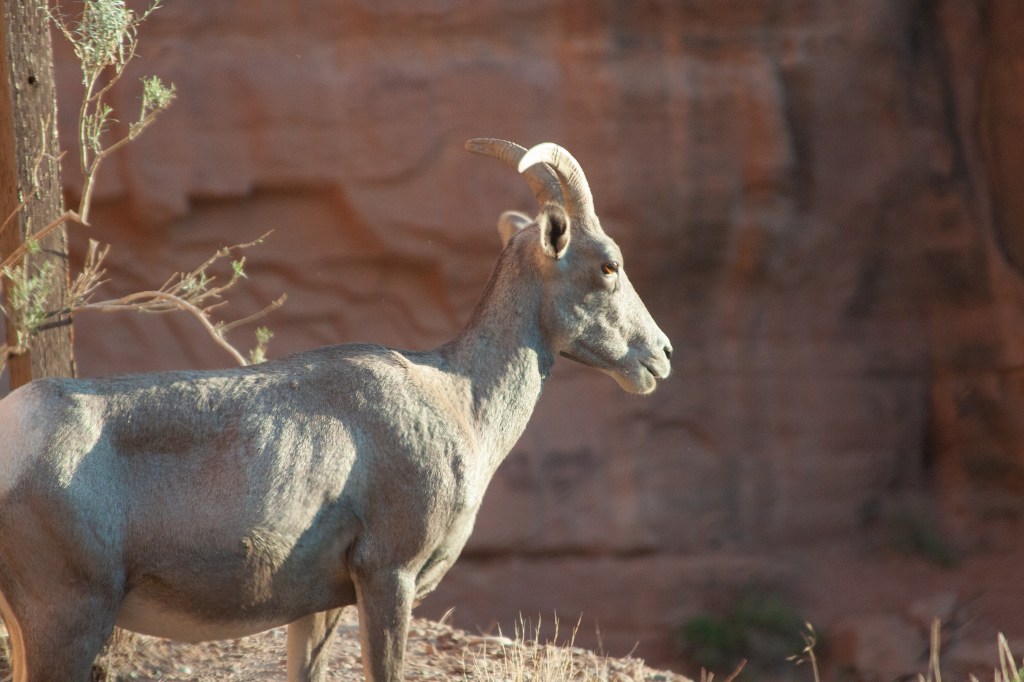
If you ever get a chance to visit, I would recommend sunrise. You won’t have to stop at the entrance station, the air will be cool, the colors will be awesome, and you may see Desert Bighorn Sheep. Best of all, other people will be back in Grand Junction waiting for a table at Denny’s.
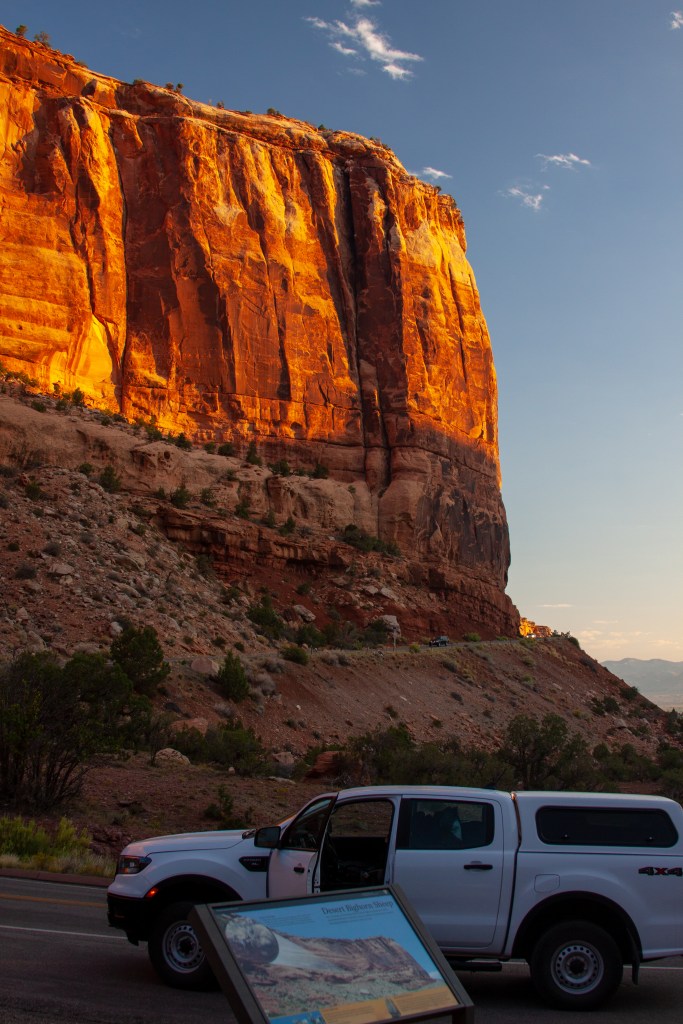
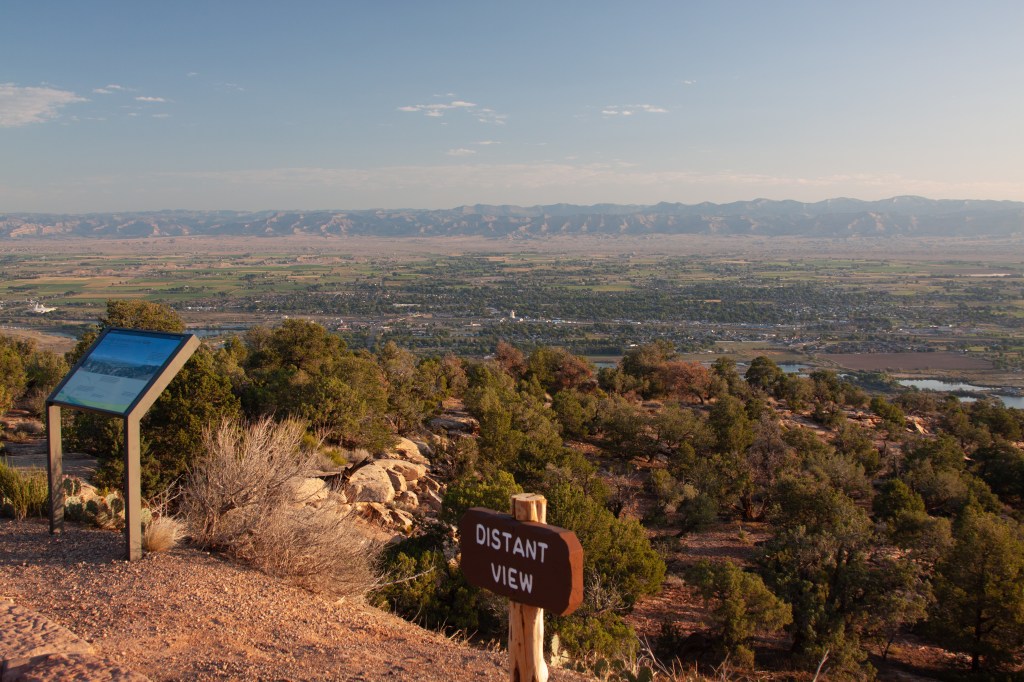
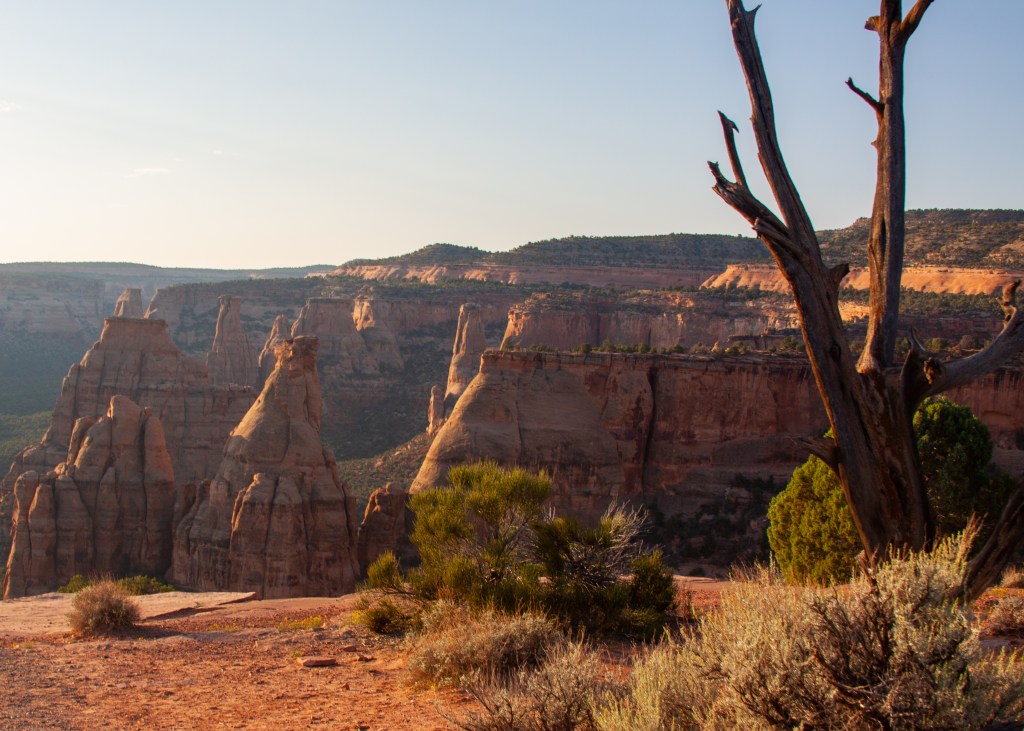
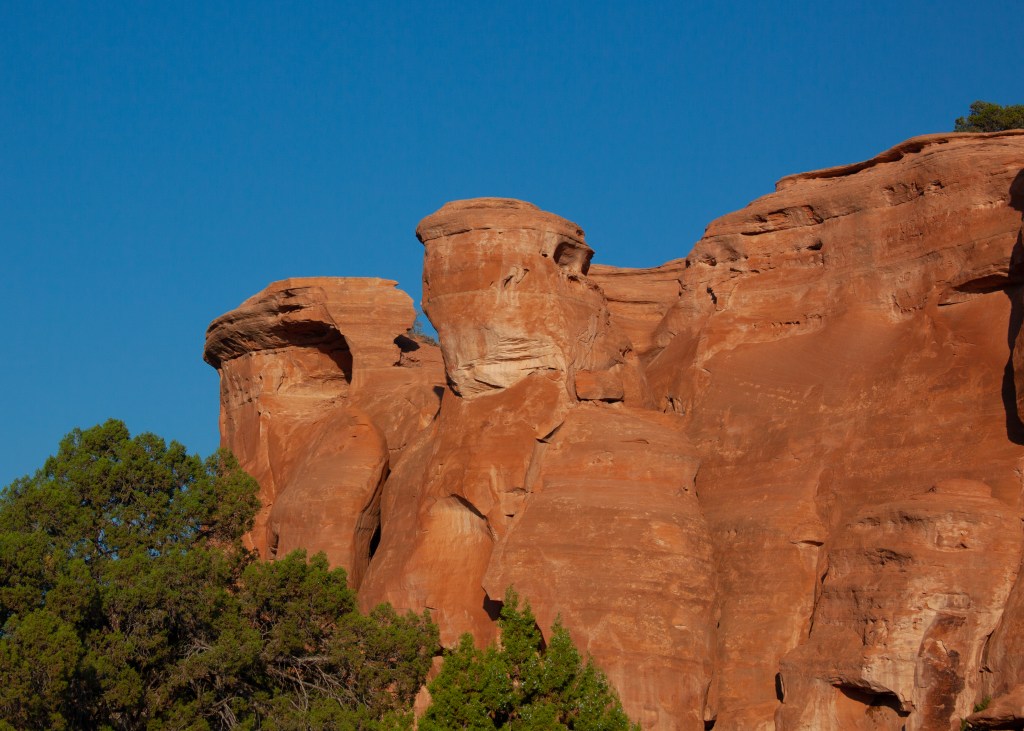
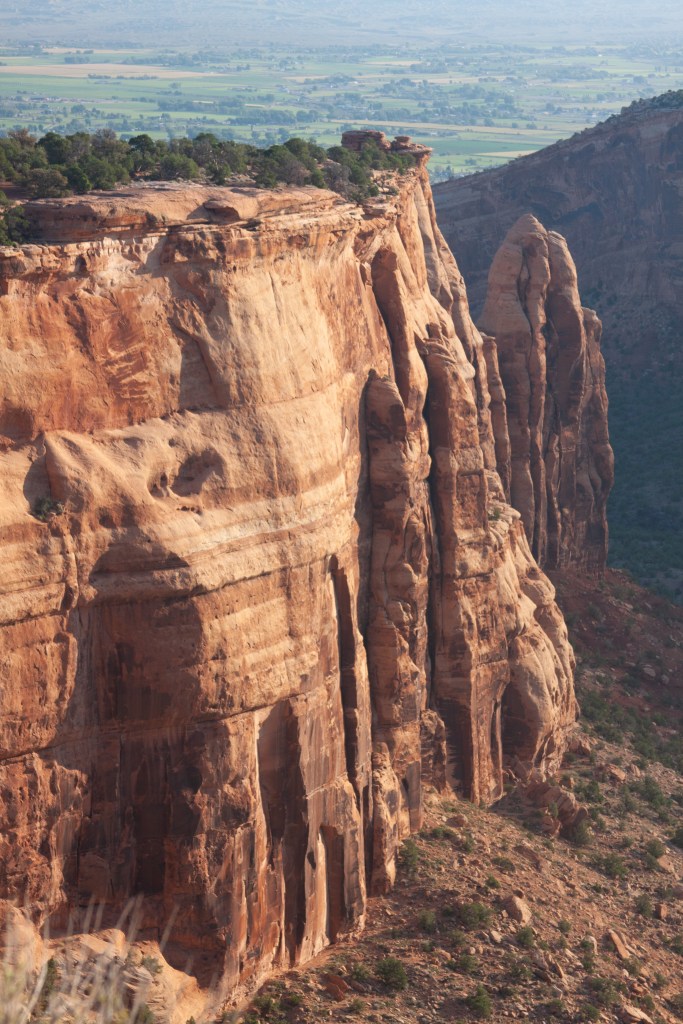
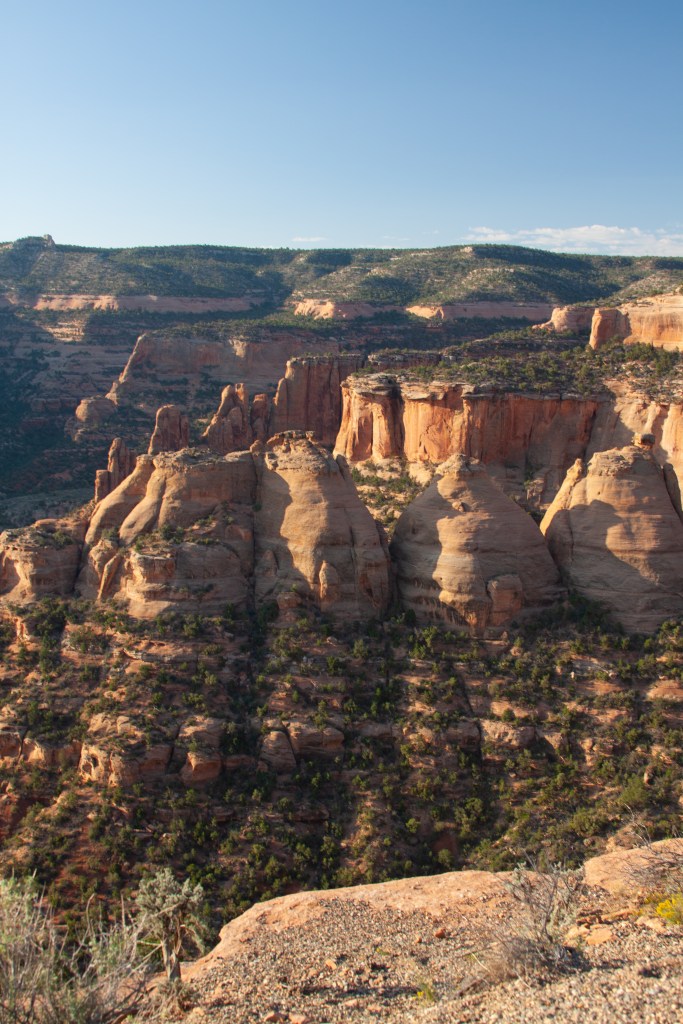
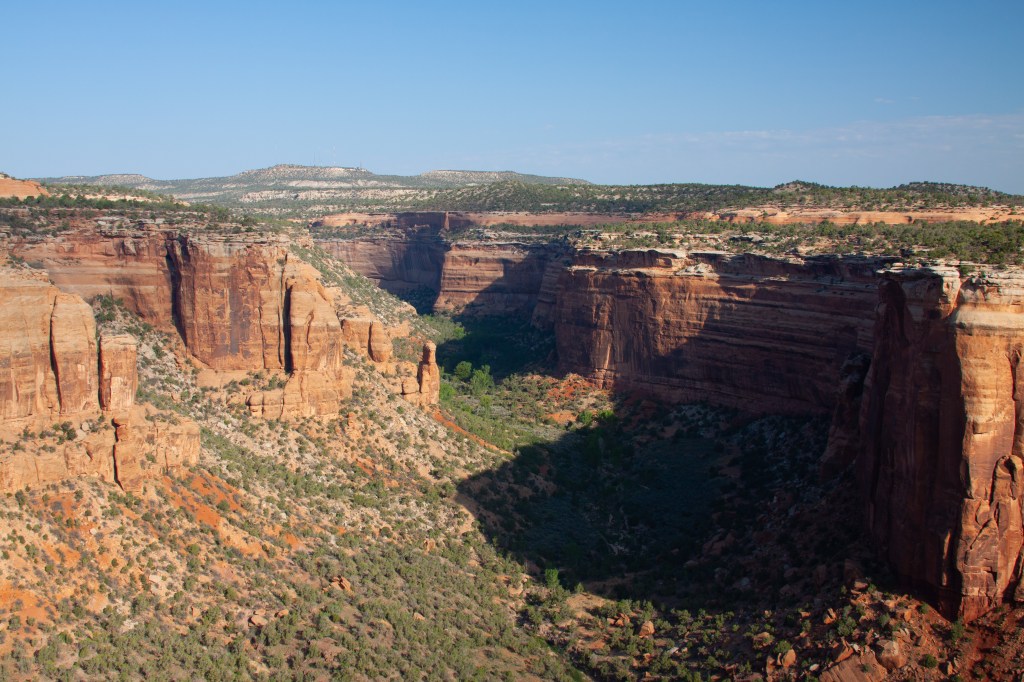
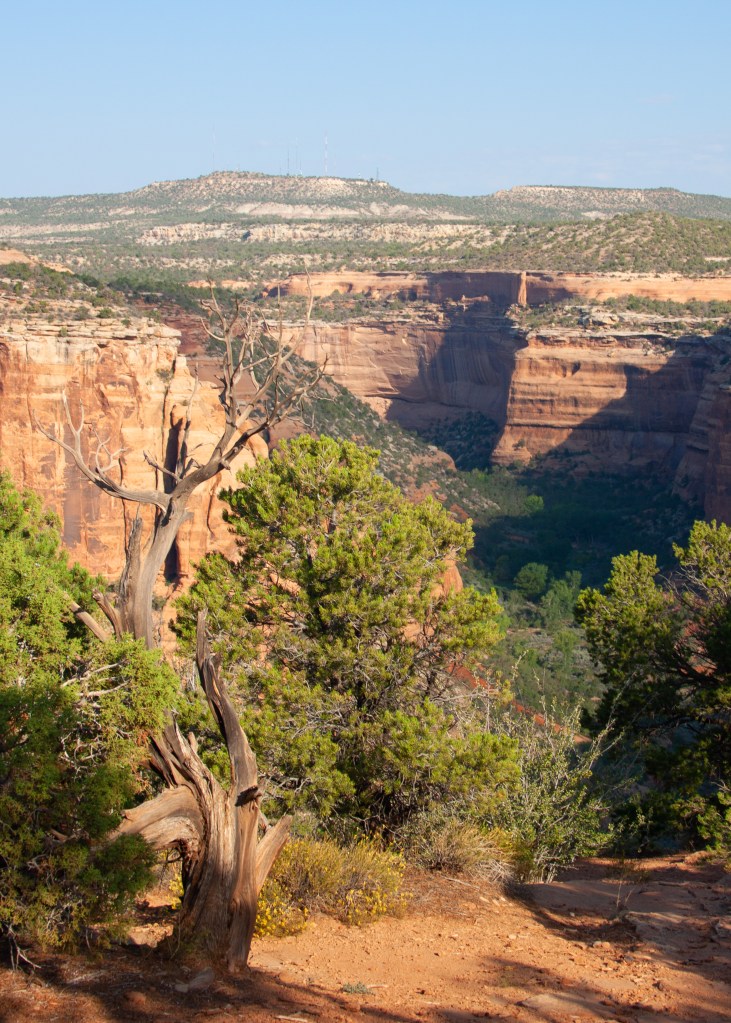
One thing to note, the road you will be driving, is often hanging on the very edge of cliffs like the ones in the background of the preceding photograph. It can be a little intimidating. And, there are rules:

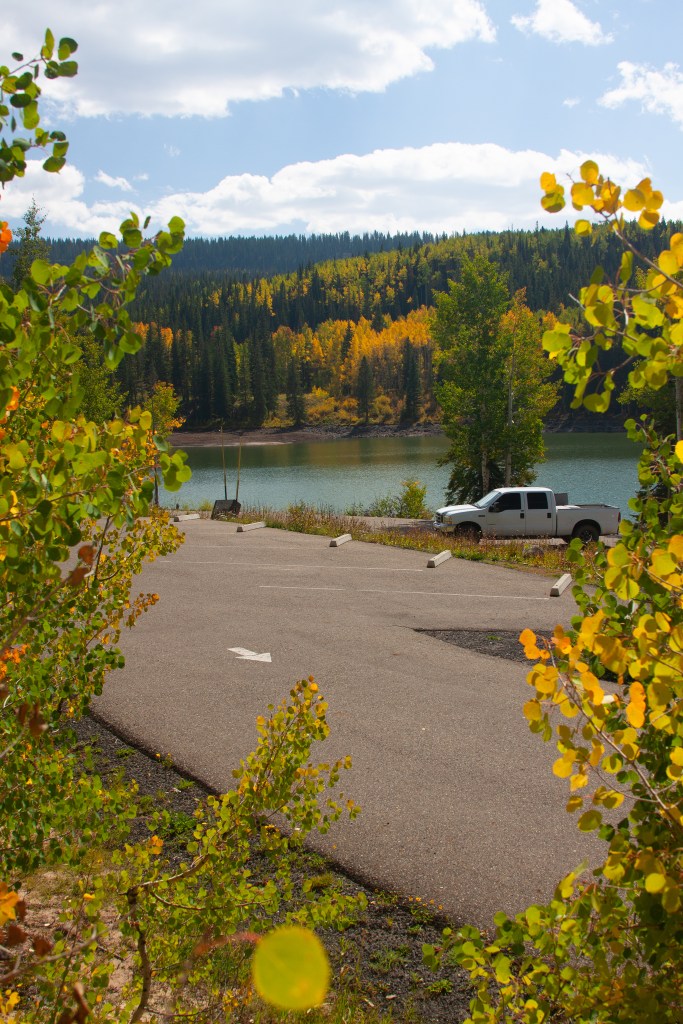
Colorado National Monument was an amazing surprise. I spent the morning there, but eventually the colors began to be washed out by the noon sun. I drove out of the east entrance back into Grand Junction and reconnected with I-70 east. I made a quick stop in Palisade to get a basket of the famous locally grown peaches, and then took the Highway 65 exit, the Grand Mesa Scenic Byway, which winds up Mesa Creek onto the top of Grand Mesa. There I set up for 3 nights of camping among the golden aspens of the U.S. Forest Service’s Jumbo Campground.
Next, dispersed camping on the slopes of Mt. Massive near Halfmoon Creek.
 Starting All Over